
I sit down to get things done, but somehow I end up bounce between ideas, second-guess every next step, and before I know it, I’ve done everything except actually start. It’s not that I’m avoiding work, I’m just caught in analysis paralysis.
With so many choices, tools, and possible directions, it’s easy to overthink and surprisingly hard to move forward. The more I try to figure out the perfect path, the harder it becomes to take even the first step.
But I’ve noticed something that things start to feel easier when I do something, anything, that breaks the loop and turns all that thinking into motion.
Napoleon HillDon’t wait. The time will never be just right.
The Real Cost of Overthinking
I’ve noticed that overthinking often hides behind what feels like productivity. It convinces you that you’re being careful, that you’re weighing every option, and that you’re preparing for every possible outcome. But most of the time, it’s just mental spinning that quietly drains your time, energy, and confidence. And the cost adds up in ways that aren’t always obvious at first:
- Lost time - I’ll spend way longer than I need to analyzing something simple. One decision turns into hours, then days, and suddenly the week is gone without any real progress.
- Missed opportunities - While I’m still thinking things through, things move on without me. The idea I wanted to try, the project I planned to start, they don’t wait for perfect timing.
- More stress than certainty - The more options I hold in my head, the heavier the decision feels. Instead of making things clearer, it creates pressure and makes even small choices feel bigger than they are.
- Less trust in myself - The constant second-guessing slowly chips away at confidence. I start doubting even simple decisions because I’ve spent too long treating everything like it needs perfect certainty.
So instead of actually moving forward, I end up stuck in planning mode, burning energy without real progress.

Smarter Ways to Break Free from Analysis Paralysis
The “Pre-Deadline” Trick
One of the biggest traps of analysis paralysis is thinking you still have plenty of time. So you delay starting. You plan a bit more, adjust ideas, rethink the approach and suddenly the deadline is doing all the talking. I’ve found a simple way to break that loop: the Pre-Deadline. Instead of only having a final deadline, I set an earlier one for myself, a point where I aim to have about 90% of the work already done.
If something is due on Friday, I’ll plan to finish the bulk of it by Wednesday. That leaves Thursday for small adjustments, cleaning things up, and fixing what needs attention. What this really does is remove space for overthinking. When there’s a clear “almost-done” checkpoint, I stop getting stuck in planning loops and start moving through the work step by step.
And ironically, giving yourself less time to overthink usually leads to better results, because you’re doing the work instead of circling around it.
The “Reverse Engineering” Method
I tend to treat big goals like overwhelming projects. I focus so much on how far away they are that I don’t even take the first step. Instead of starting with a perfect roadmap, I start with a simple question: How would I feel if I had already achieved this? That emotional picture becomes the starting point.
If my goal is to start a YouTube channel, instead of getting stuck thinking about editing and content, I imagine the exciting moment when the first video is live and I’m getting likes and comments.
What this method does is shift the focus away from over-planning and back toward action. It turns goals into something I can emotionally connect to today, and that makes it much harder to stay stuck in thinking instead of doing.

The “Just Start” Trigger (Zeigarnik Effect)
A big part of analysis paralysis comes from keeping tasks in your head instead of turning them into something real. As long as a task stays unstarted, it feels vague, and vague things are easy to delay.
The Zeigarnik Effect explains a useful shift here: once we begin a task, even in a very small way, our brain tends to keep it active in the background. Unfinished work doesn’t disappear mentally, it stays “open,” creating a quiet push to return to it.
If I want to exercise, I don’t commit to a full workout, I do a single push-up. If I want to begin a project, I don’t organize everything upfront, I open a note and write a few rough steps. The goal isn’t momentum in theory, it’s breaking the mental loop where thinking replaces doing.
Once a task is started, it stops being something to endlessly analyze and becomes something the mind naturally wants to complete.

The “Name the Fear” Reset
A lot of indecision doesn’t come from not knowing what to do; it comes from something quieter underneath it: fear. Fear of failing, being judged or choosing the wrong path. The problem is that this fear usually stays unspoken. It just turns into hesitation, overthinking, and endless comparison between options.
One way I break that loop is to name it. I pause and put it into words: what exactly am I afraid of right now? Just saying it clearly already takes away some of its weight. Then I ask a second question: what would I do if this fear wasn’t driving the decision?
Almost every time, the answer is simpler, but fear is what makes it feel complicated and harder than it really is. This isn’t about ignoring fear or pretending it doesn’t exist. It’s about separating it from the decision so it doesn’t quietly choose for you.
The “Friction-Free Launchpad”
The more steps it takes to start, the easier it is for your mind to delay or avoid it completely. That’s why I try to design a “launchpad” for anything I want to do.
Instead of relying on motivation in the moment, I remove as many starting barriers as possible so the first action feels almost automatic. If I want to work out, I put my shoes and clothes where I can see them so starting doesn’t require extra effort or decisions. When the first step is effortless, there’s less room for overthinking, and more space for beginning.
How Planndu Helps You Take Action
Planndu is designed to cut through the noise and help you move from thinking to doing. If you’re stuck in the trap of constantly adjusting your workflow or feeling overwhelmed by choices, this app is for you. Here’s how it helps:
Simple Interface, No Clutter
Planndu is intentionally minimalistic, designed to give you exactly what you need to organize your day without the distractions of endless settings. You can spend less time figuring out how to use the app and more time being productive.
Set Status and Priorities
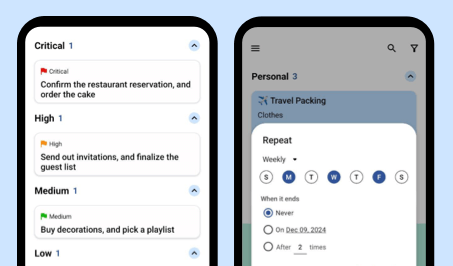
Planndu makes it simple to set statuses like “To Do,” “In Progress,” or “Done,” so you always know exactly where each task stands without sifting through endless notes. You can also easily assign priority levels to each task, whether it’s critical, high, or low, ensuring that you focus on what matters most at the right moment.
Reminders
With Planndu’s built-in reminders, you never forget a crucial task. Set gentle nudges to keep your day on track, and use the app to give you timely alerts for key milestones or recurring tasks. Whether it’s remembering to check emails or keeping on top of long-term projects, reminders help turn intentions into actions. These prompts keep your workflow smooth without the overwhelm.
Pomodoro Timer
Staying focused has never been easier with Planndu’s Pomodoro timer. Work in focused bursts, typically 25 minutes, followed by short breaks. This time-management technique boosts productivity while keeping burnout at bay. The timer works seamlessly within the app, set it with a single tap, track your sessions, and watch your progress in real-time. It’s a simple way to stay on task without feeling like you’re burning out.
Pre-Built Templates
Stop stressing over starting from scratch. Planndu’s pre-built templates provide instant structure to your tasks. Whether you need a travel packing list, a grocery shopping guide, or even a gratitude journal to help you reflect, the templates give you a starting point in seconds. You can customize them to your needs or use them as-is, whatever gets you moving forward faster.

Analysis paralysis keeps you stuck in the planning phase, held back by the need to get everything just right. The way forward is through action. Start small, stay focused, and rely on tools that support progress without overcomplicating things. With Planndu, you can stop spinning your wheels and start making progress. Download it today and move forward with focus.